Monday, October 12, 2009

Infrared Zoo Animals

Infrared Zoo
Infrared light shows us the heat radiated by the world around us. By viewing animals with a thermal infrared camera, we can actually "see" the differences between warm and cold-blooded animals. Infrared also allows us to study how well feathers, fur and blubber insulate animals. As you tour this "Infrared Zoo", see what new information you can gather about the animals here that you would not get from a visible light picture. If you would like to learn more about infrared light and the infrared universe visit Cool Cosmos. Enjoy your tour! 


http://coolcosmos.ipac.caltech.edu/image_galleries/ir_zoo/


Friday, October 9, 2009

NASA Spacecraft Impacts Lunar Crater in Search for Water Ice

 NASA's Lunar Crater Observation and Sensing Satellite, or LCROSS, created twin impacts on the moon's surface early Friday in a search for water ice. Scientists will analyze data from the spacecraft's instruments to assess whether water ice is present. 


Wednesday, October 7, 2009

Fall of the Mayan Civilization


Archeologists are using NASA satellites and supercomputers to crack the mystery of the ancient Maya. New findings suggest the Maya may have played a key role in their own downfall.

Infrared Ring Around Saturn


October 7, 2009: NASA's Spitzer Space Telescope has discovered an enormous and previously unknown infrared ring around Saturn. Check it out at the site below:


Wednesday, September 30, 2009

Paramecium


This is a microscope photograph of a single celled organism called an PARAMECIUM. It lives in pond water.

Cells!

I'm sorry I haven't posted anything for a few days. All the recent holidays have kept me away from the computer.
Today, the Biology classes were introduced to the concept of cells. The following website has photos, videos and interactive games - all about cells. Give it a try!

Thursday, September 24, 2009

Sun in Stereo

Do you have stereo glasses (the red/blue variety) handy?Even if you don't have any stereo glasses, you will enjoy this great website that shows stereo pictures of the sun. The stereo pictures are useful for viewing huge explosions of gas such as solar flares and prominences.

Wednesday, September 23, 2009

MESSENGER Flies by

NASA's MESSENGER spacecraft is set to make its third and final flyby of the planet Mercury on Sept. 29th. The encounter is expected to produce hundreds of images of previously unseen terrain and confirm the strange elliptical shape of Mercury's equator. You can read about it at the NASA website below. The photos are amazing!

http://science.nasa.gov/headlines/y2009/23sep_mercuryflyby3.htm?list98334

Sea Otter Quest


While in Alaska this summer, I took an excursion on a Catamarin (a type of boat) to search for groups of Sea Otters. We were very successful and founds many groups floating together in "mats" right in the middle of the ocean. I'm attaching a link for you to go to in order to learn a little about these fascinating sea creatures.

Tuesday, September 22, 2009

Tonight's link is a lot of fun. Some of you may have seen it already but most of my RGHDS fans probably haven't. You write a message and Google Earth finds the letters in the shape of buildings and writes your message using building letters. Have fun!


Monday, September 21, 2009

Tomorrow is a special day - the Autumnal (Fall) Equinox. On this day, everyplace on Earth has 12 hours of daylight and 12 hours of darkness. Each day after tomorrow we lose a few minutes of daylight until December 21st which is the Winter Solstice. On that day we will have only about 8.5 hours of daylight and 15.5 hours of darkness.

The website below shows the lit portion of the Earth:

http://www.opentopia.com/sunlightmaphemi.html

HAPPY FALL!

Thursday, September 17, 2009

Do you ever sit at the computer and wish there was something to do - something that wasn't mindless. Well, you need to go the the National Geographic Kids website. There are videos (swimming with sharks at Cocos Island), games, puzzles and so much more. I had a great time visiting there.

Wednesday, September 16, 2009

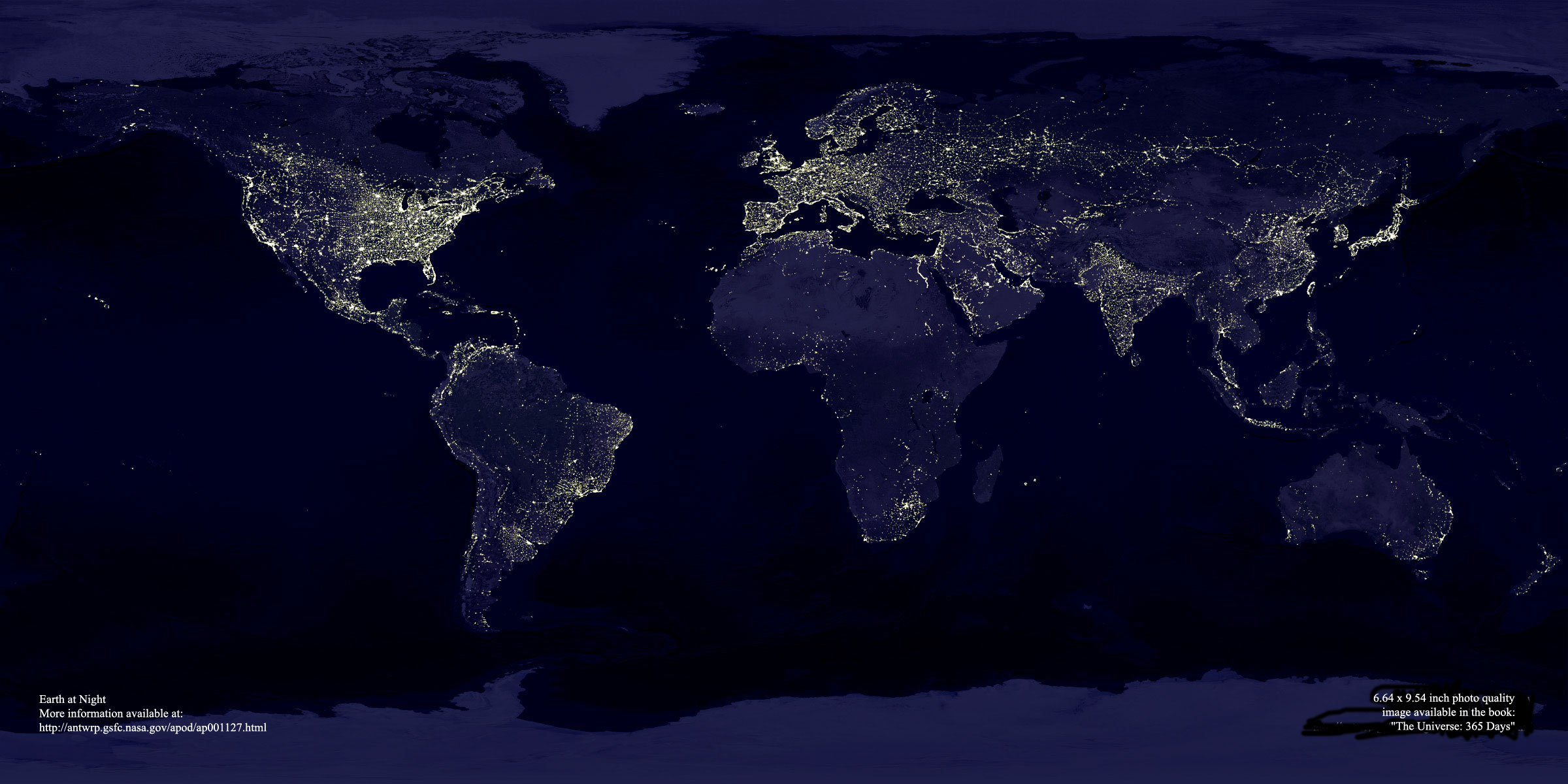
OK, I can't resist this one. It shows the Earth lit up at night as viewed from Space. How many cities can you name?

Hi Everyone! It's about time I updated this blog. I am hoping to share some very cool science websites with my students and their families. Hopefully, you, my faithful student, will have a chance to think lofty thoughts outside the classroom.